What common ground exists between the exploration of science frontiers and the enduring legacy of a civilization buried for millennia?
On March 20, the inaugural lecture of the Humanities and Arts Lecture Series at the Eastern Institute of Technology, Ningbo (EIT) commenced. Professor Hua Sun, a distinguished professor from School of Archaeology and Museology of Peking University and the Academic Director of the Sanxingdui Research Institute, delivered a compelling talk titled “Sanxingdui Archaeology and Chinese Civilization.”
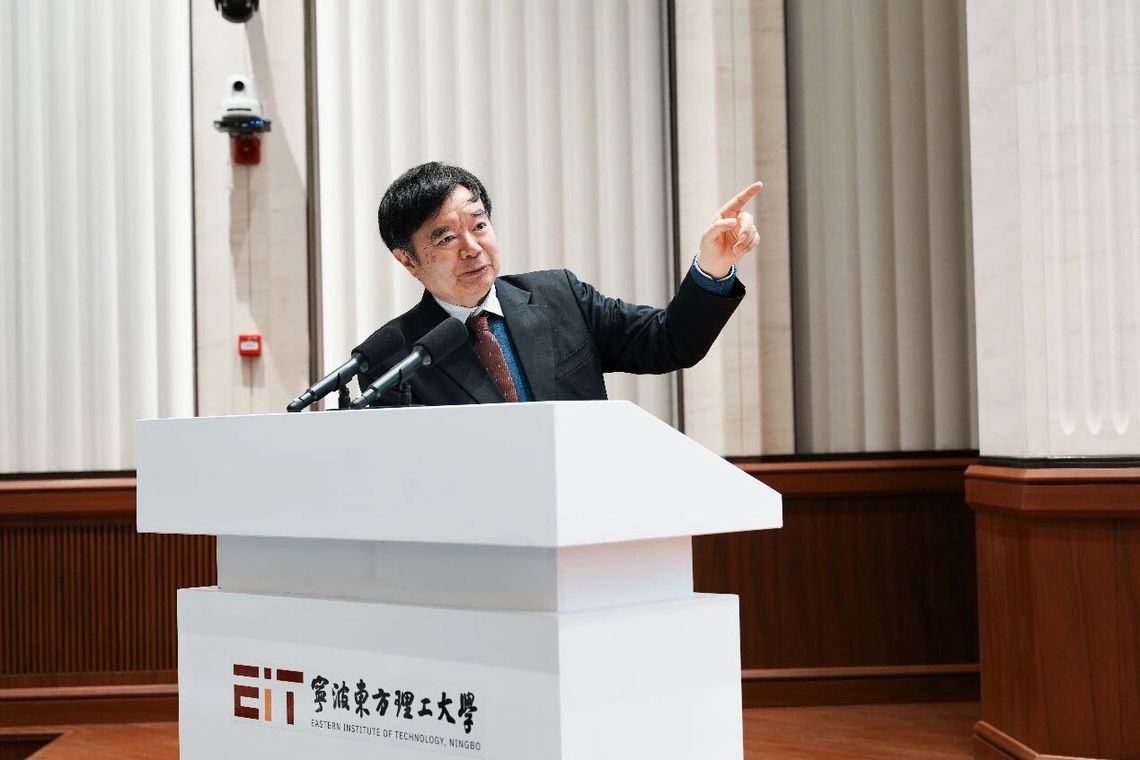
Professor Hua Sun, the Speaker
Over the course of two hours, Professor Hua Sun guided the audience through the layers of history, transporting them back three thousand years to the ancient kingdom of Shu. Through the lens of rigorous archaeological evidence, he curated a profound dialogue between science and the humanities.
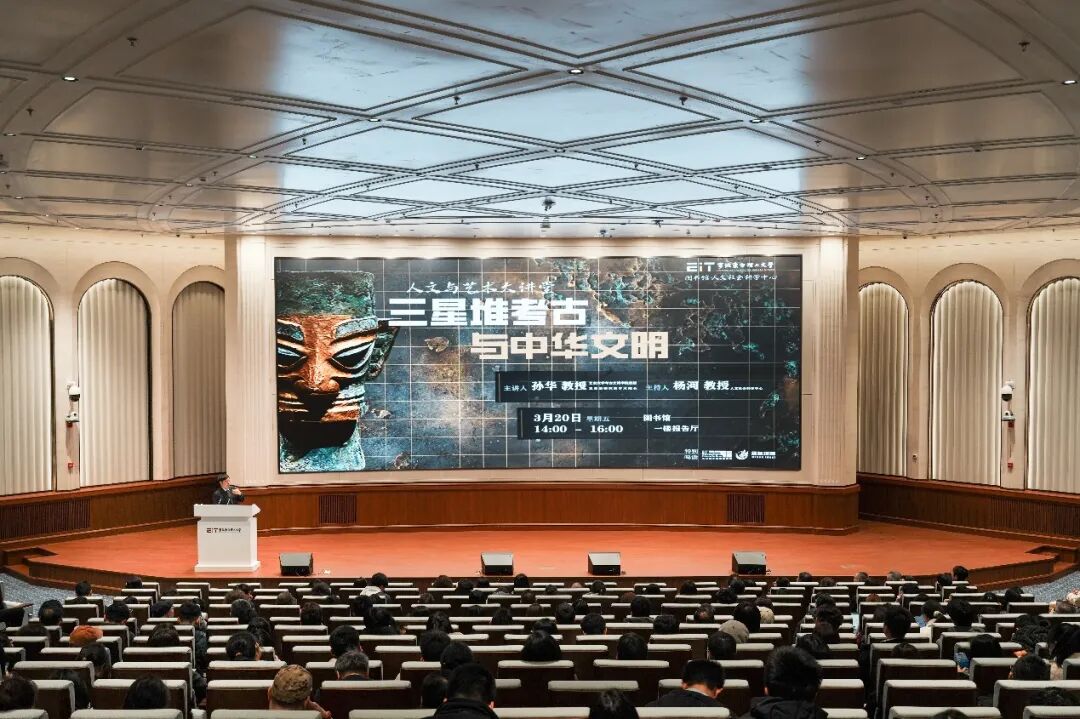
The Youngor Library Lecture Hall was filled to capacity. The audience was a mix of EIT faculty and students, alongside a significant number of history enthusiasts who had come from outside the university—some even from other cities. Professor He Yang, Dean of the Center for Humanities and Social Sciences at EIT, served as the moderator.
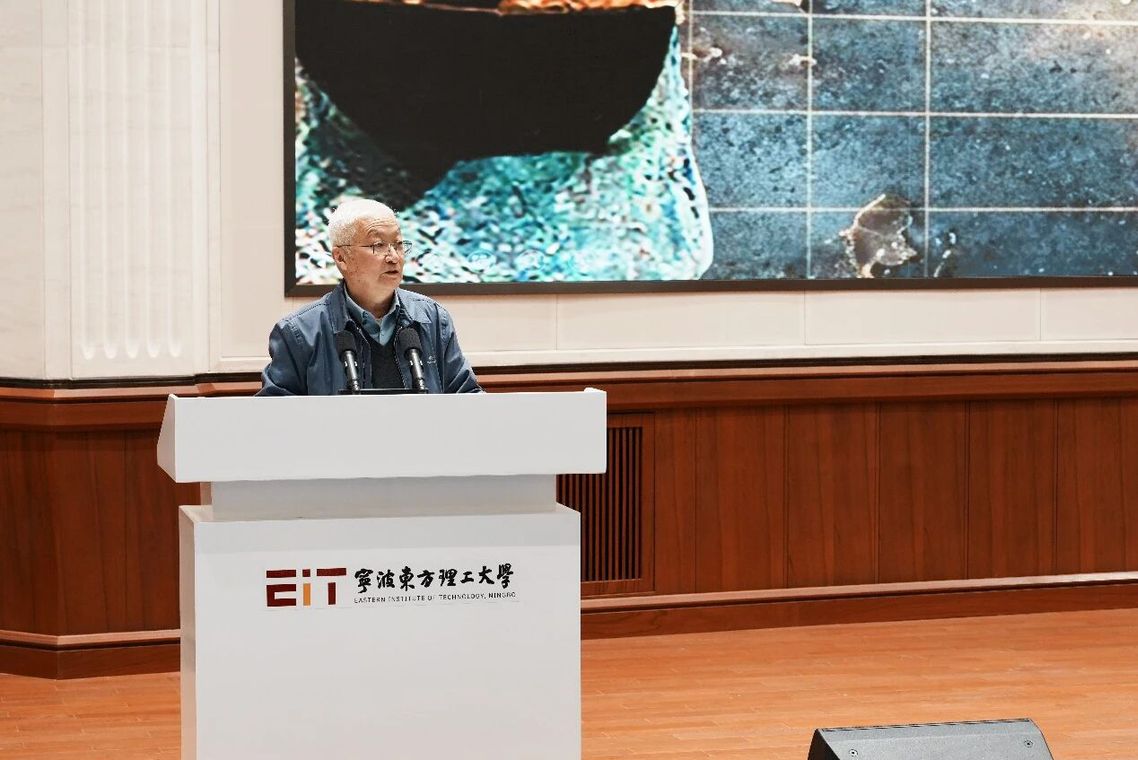
Professor He Yang, Dean of the Center for Humanities and Social Sciences, Moderating the Event
Tracing the Ancient Shu: A Tale of Two Cities—Sanxingdui and Jinsha
In the popular imagination, Sanxingdui is often shrouded in mystery, associated with artifacts like the “Bronze Sacred Tree” and “Bronze Mask with Protruding Eyes”. Professor Hua Sun, however, presented Sanxingdui not as a collection of isolated curiosities, but as part of a coherent and logical narrative of urban and cultural evolution.
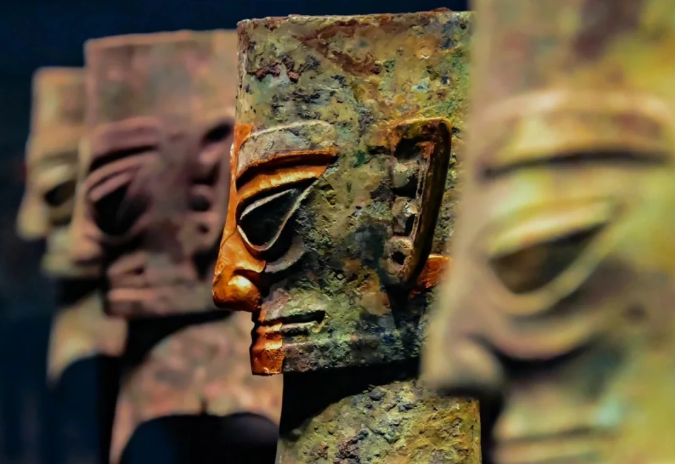
A Bronze Mask from Sanxingdui
He began not with the intricate details of the enigmatic bronze masks and golden scepter, but with the measured caution of a archaeologist, first establishing a grand historical and geographical framework.
From the perspective of settlement archaeology, he meticulously traced the developmental arc of the Chengdu Plain, connecting the Baodun Culture, Sanxingdui Culture, and Shi'erqiao Culture in a continuous sequence.
He argued that Sanxingdui and Jinsha are not isolated sites but successive capitals, representing the political and cultural heart of the ancient Shu civilization on the Chengdu Plain for over a millennium. Their urban planning reveals a sophisticated worldview and a distinct cosmological principle. A river bisected the city, delineating a “secular” zone on its northern bank from a “sacred” zone on its southern bank. This urban design, which used a waterway to reflect a celestial order on earth, was not only a testament to the ancient Shu people’s mastery of their environment but also a precursor that profoundly influenced the layout of later major Chinese capitals, including Xianyang of the Qin dynasty.
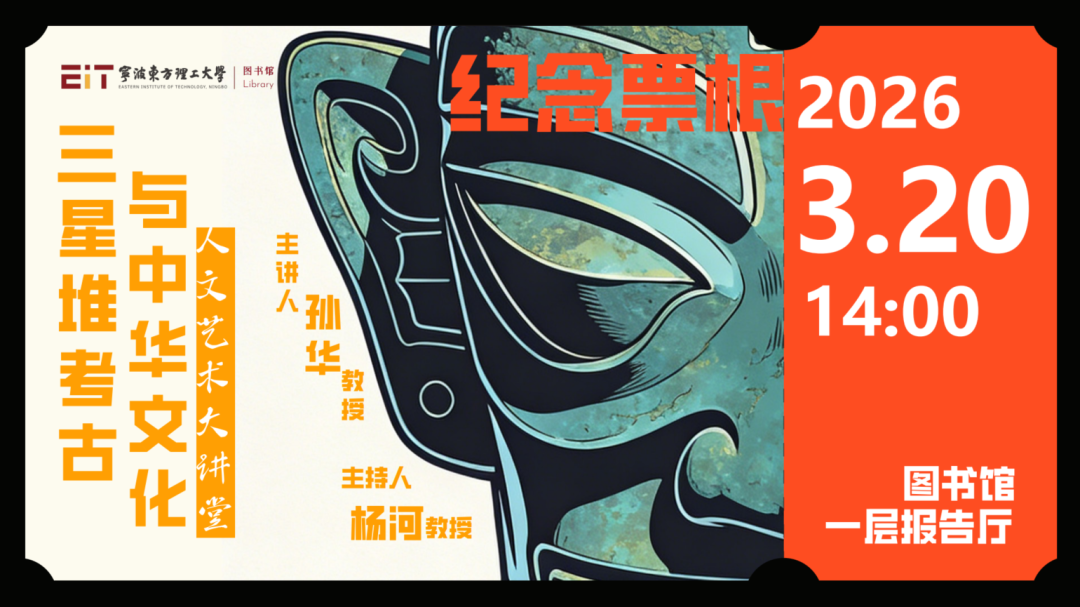
A Commemorative Ticket Stub from the Lecture
Professor Hua Sun also focused on the dynamic human landscape behind Sanxingdui, highlighting the flows of people and the fusion of cultures. From the remnants of Baodun Culture settlements found beneath Sanxingdui’s city walls to the sudden disappearance of earth-burial practices; from the incorporation of influences from the Erlitou and Qijia cultures to the adoption of advanced bronze metallurgy from the Shang and Zhou dynasties, the rise and fall of Sanxingdui was a story of constant interaction. This interaction extended to the Yellow River Valley, the middle and lower reaches of the Yangtze River, and even more distant lands. The breathtaking bronze ritual vessels and divine figures, he explained, were the material manifestation of the ancient Shu people’s unique cosmology. They synthesized their indigenous woodcarving traditions with the bronze-casting techniques acquired from the Central Plains, creating a visual language that reflected their distinct understanding of the relationship between heaven, earth, and humanity.
When Scientific Inquiry Confronts Archaeological Puzzles
The Q&A session was marked by a lively exchange, with hands shooting up across the lecture hall.
Questions ranged from the practical—"How do we forge meaningful interdisciplinary paths between engineering technologies and humanities research?"—to the more historically focused, such as the influence of the Zhou dynasty's well-developed ritual system on Jinsha culture. The queries reflected both a deep curiosity about archaeological specifics and a capacity for interdisciplinary thought.
When confronted with the popular theory of Sanxingdui's extraterrestrial or non-Chinese origins, Professor Hua Sun met it with a blend of humor and scholarly precision. After noting that "aliens only ever seem to land in America in science fiction films," he laid out his core academic argument:"To substantiate claims of long-distance cultural transmission, one must establish a clear chronological gap and a verifiable transmission route. Drawing parallels based solely on superficial visual similarities is an act of anachronism. Often, what we see are instances of parallel evolution—shared traits emerging independently across different human societies."
Other audience members posed questions of broader significance: How can empirical archaeological research further bolster China’s cultural confidence in the contemporary era? And for a new type of research university like EIT, one dedicated to cutting-edge science, what role do cultural initiatives and humanistic education play?
Professor Hua Sun addressed each of these questions, which skillfully wove together academic depth with contemporary relevance.
The Humanistic Foundation of a New Type Research University
As a new type research university committed to being “high-caliber, compact yet distinguished, innovation oriented, and globally engaged,” EIT is committed to a disciplinary structure grounded in the sciences and rooted in engineering, with a distinctive integration of the two. Its academic programs center primarily on science, engineering, information technology, and business management, complemented by distinctive humanities and social sciences.
What is the value of listening to a lecture about ancient ancestral rites, theocratic aristocracies, and the rise and fall of a millennial-old capital on a campus focused on scientific exploration? This was precisely the question the inaugural forum sought to answer.
True innovation, it suggested, is not born solely from data models and laboratory experiments. It also germinates from a deep understanding of the human story. The archaeologist’s task—reconstructing historical patterns from fragmented material remains—shares a fundamental spirit with the scientific endeavor to uncover universal truths from complex data.
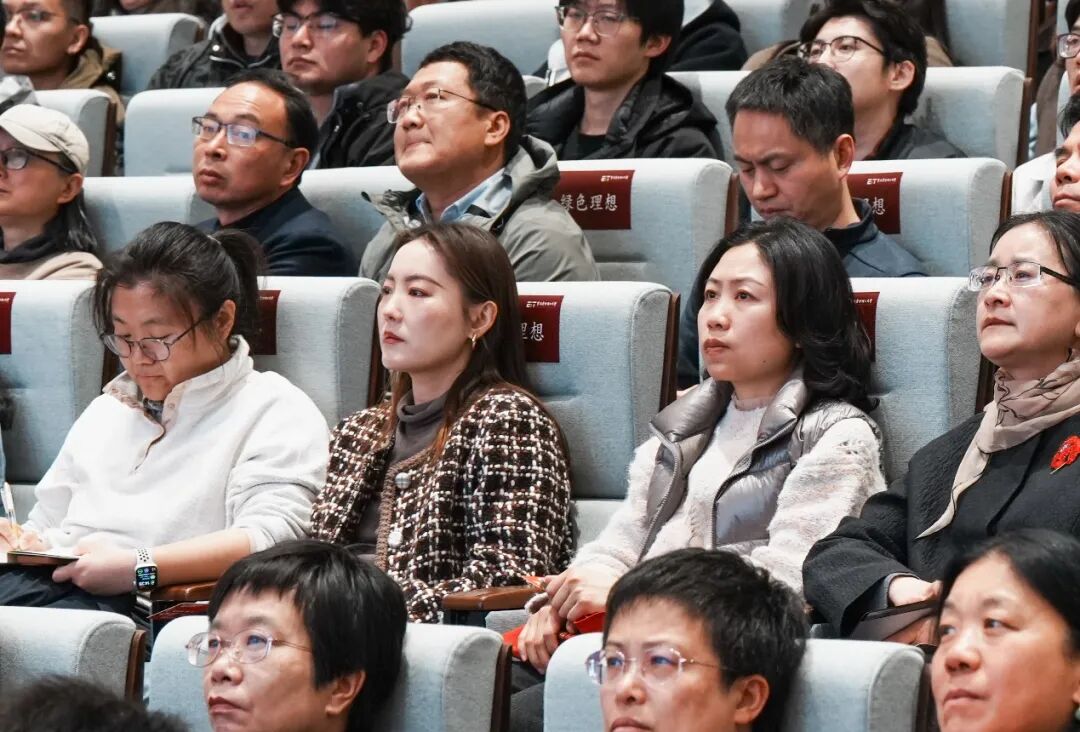
Scene from the Lecture
A profound historical perspective and a strong humanistic grounding do more than simply broaden the intellectual horizons of scientists and engineers. In the fast-paced world of research, they provide a crucial anchor, a source of resilience and perspective. By engaging with the depth of civilization, we are better equipped to understand our place in the present and chart a course for the future.
The inaugural lecture concluded on a successful note, yet the Humanities and Arts Lecture Series at EIT is only just getting started. Drawing on the library’s resources and the academic strengths of the Center for Humanities and Social Sciences, the series will continue to bring leading humanists and artists from China and abroad to campus. It envisions a future where ongoing intellectual exchange allows the humanities to take root and thrive—enriching the very ground from which innovation springs and, in turn, nurturing a cultural foundation as enduring as EIT itself.